Guides · Sick houseplant · Autumn
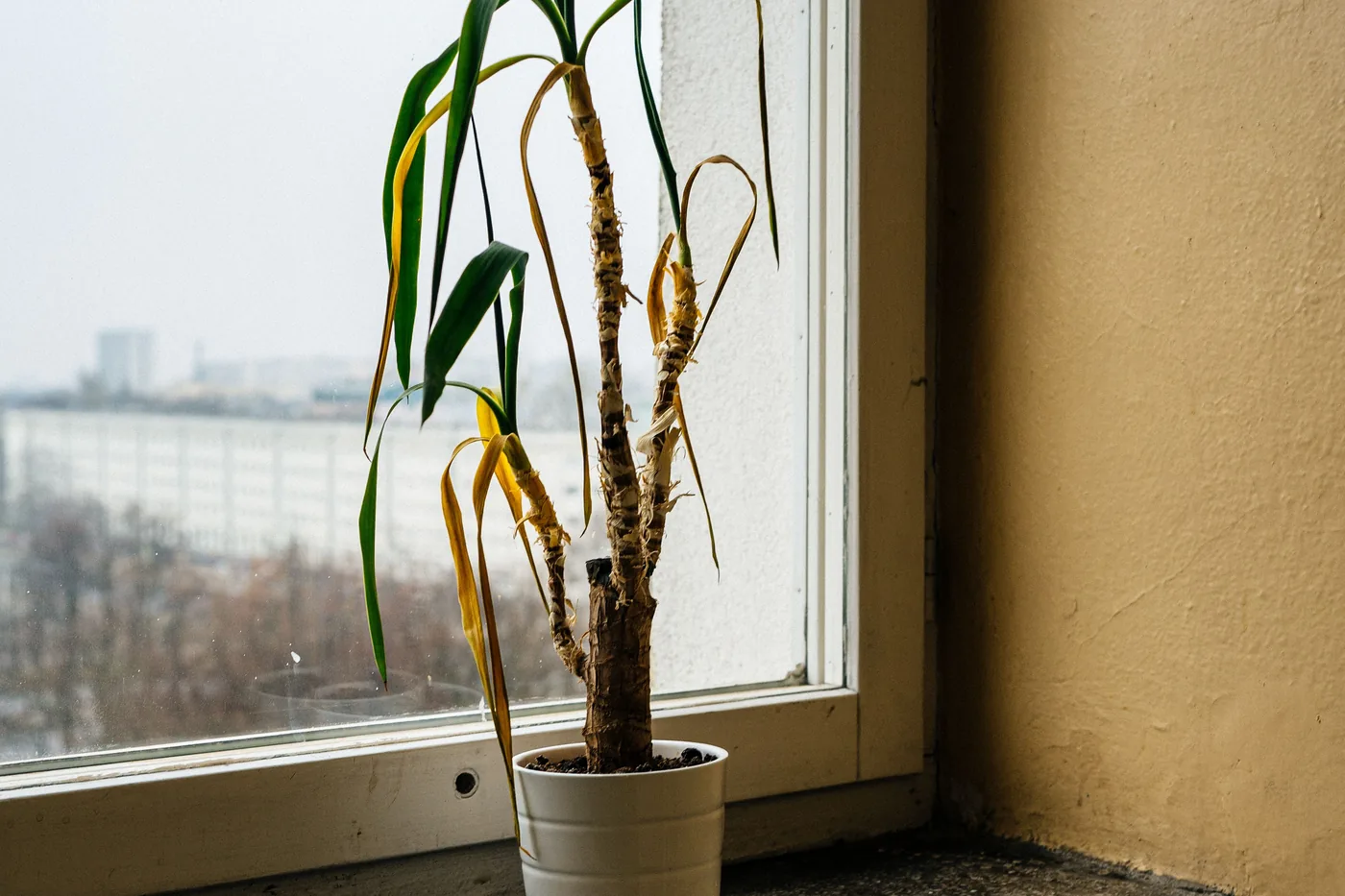
My houseplant looks sick. What is wrong with it?
A houseplant has about a dozen ways of telling you something is wrong, and most of them come down to four causes: water, light, air, and something living in the pot. This page is the working-out. Three checks first, then every symptom with what it usually means, then what to do this week. Written for British homes in autumn, when most of these start.
- Check 1 · The soil
- Push a finger in. Wet, damp, or dry decides half the answers below
- Check 2 · Which leaves
- Old ones at the bottom, new ones at the top, or patches — each points somewhere different
- Check 3 · The spot
- How far from a window, and what it sits next to: radiator, door, cold glass
Most sick houseplants get treated for the wrong thing because the owner starts from the leaf. Start from the soil. A drooping plant in wet compost and a drooping plant in dry compost look identical and need opposite things, and the finger test settles it in a second. Then look at which leaves are affected, because a plant sheds from the bottom when it is old or overwatered and fades from the top when it is hungry or short of light. Then look at where it sits: the radiator it is above, the door it is beside, the window it is two rooms from.
With those three answers, the table below usually gives one cause, occasionally two. If it gives two, the soil check breaks the tie.
Fourteen symptoms, in the order people notice them. The middle column is the usual cause; the right column is what else it can be, and the tell that separates them.
| What you see | Usually | Or, if… |
|---|---|---|
| Yellowing lower leaves | Overwatering if several and soft; natural ageing if one at a time | Underwatering if crisp and the soil is dry. The yellow leaves page splits these. |
| Yellowing new or all leaves | Hungry — nutrients used up | A cold draught if sudden; pests if the leaves are also sticky or speckled |
| Brown, crispy tips or edges | Dry air, or underwatering | Hard tap water on a sensitive plant. Brown tips page. |
| Brown or dark spots | A leaf-spot fungus, from wet leaves and still air | Sun scorch if only on the window side; overwatering if the spots are soft |
| Drooping or wilting | Underwatering if the soil is dry; overwatering if it is wet | Cold shock if it happened overnight by a window |
| Dropping leaves | Shock after a move or repot, or a temperature swing | Water, either way, if it has been going on for weeks |
| Leggy, stretched growth | Too little light | Nothing else does this. Move it. |
| Mushy or soft base | Overwatering, and by now root rot | Act this week; see the steps below |
| Wrinkled or curling leaves | Underwatering | Too much sun if the leaves are also pale; pests if the undersides are dotted |
| Visible bugs or webbing | Pests — spider mites, aphids, scale, mealybug | Fine webbing and speckled leaves in dry heated air is spider mite |
| Small flies around the compost | Fungus gnats — compost that never dries | Fruit flies if they are round, red-eyed, and hover near the bin instead |
| White powder or mould | Powdery mildew on leaves; harmless mould on wet compost | A white crust on the soil surface is minerals from hard water, not mould |
| Pale or faded colour | Too much direct sun, bleaching the leaf | Hunger or low light if the plant is nowhere near a bright window |
| No new growth | Autumn and winter: normal | In summer, hunger or low light |
Water, nearly always too much
Watering to a schedule instead of to the soil is the single most common way houseplants decline, and in autumn it gets worse: the light drops, the plant drinks less, and the Saturday routine that was right in July now waters into wet compost. Roots sitting wet run out of air, die, and then the plant wilts, which looks like thirst, and gets watered again. If the soil is damp and the plant is unhappy, stop watering before you do anything else.
Light, nearly always too little
A north-facing room in November has a fraction of the light it had in June. Plants stretch towards the window, go pale, and stop. Two metres from a window is the dark for most of them. Move it closer, and water less while it adjusts.
Air: too dry, too cold, or not moving
Central heating dries the air and crisps tips. Cold glass and draughts by doors drop leaves overnight. Still, damp air grows fungus on leaves. Look at what the plant is next to.
Something living in the pot
Gnats in the compost, mites on the undersides, mealybug in the leaf joints. Isolate the plant from the others first, then treat with a category of product sold for the purpose, not a kitchen remedy.
- Stop watering, unless the soil is bone dry
- Most sick plants are wet. Let the top few centimetres dry properly before the next drink, and tip out anything standing in the saucer or cover pot. If the soil is genuinely dry and pulling from the pot, soak it in a basin for twenty minutes and drain.
- Move it to good light, away from heat and draughts
- Within a metre of a bright window, out of direct midday sun, off the radiator, away from the door. Light and warmth dry compost and get the plant working again.
- Isolate it if anything is living on it
- Pests spread between pots on a windowsill. Move it apart, wash the leaves, and treat.
- If the base is soft or the soil smells sour, check the roots now
- Unpot, trim anything brown and slimy back to firm pale root, repot into fresh compost in a pot no bigger than it needs. This is the one symptom that does not wait.
- Do not feed it
- A struggling plant cannot use fertiliser, and salts in wet compost burn what roots are left. Feed only a healthy plant, in the growing season.
- Change one thing, then wait two weeks
- Judge by the new growth, not the damaged leaves. Leaves already lost do not come back; the next ones tell you whether the fix worked.
- Do not water a wilting plant without checking the soil. Half the time it is drowning.
- Do not move it up a pot size while it is struggling. More compost holds more water for longer.
- Do not mist it to help. Misting does nothing for roots and keeps leaves damp for fungus.
- Do not spray the leaves for a soil problem, or drench the soil for a leaf problem. Treat where the trouble lives.
- Do not throw it out while there is a firm root or a firm stem left. Houseplants come back from very little, slowly, from the crown.
This page names categories, not products, on purpose. Availability and approval change; what works does not.
This table is what Sabz’s Check-up does, with one advantage: it knows how often you have actually watered, when the plant last moved rooms, and what it is. Pick the symptoms you can see, answer the soil question honestly, and it weighs the causes above against your own care history, then gives you the plan for your plant rather than the general one.
Free to start. No account, no analytics.