Guides · Overwatering · Autumn
Have I overwatered my houseplant?
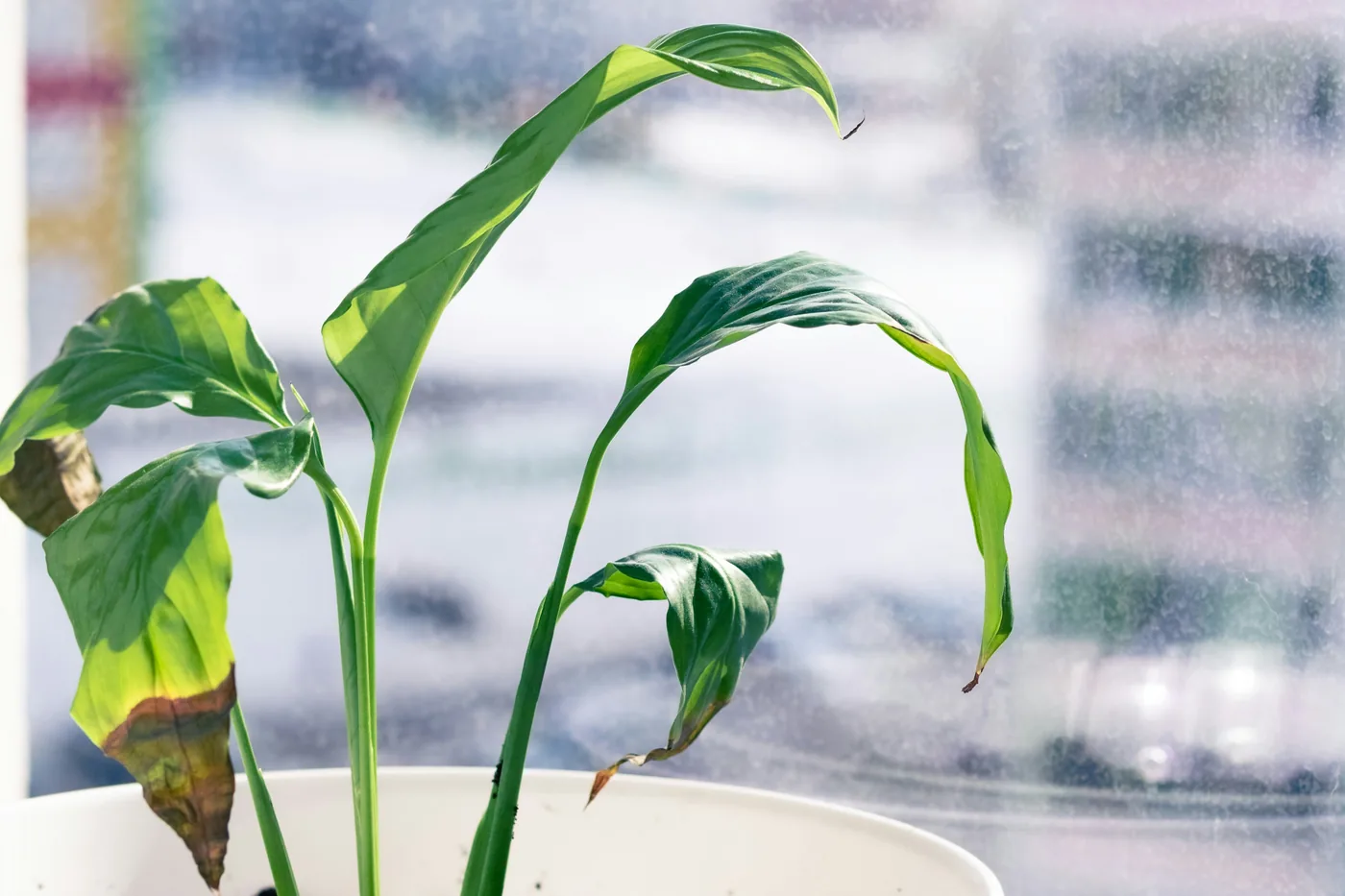
Probably, if it is yellowing from the bottom and drooping while the soil is still wet. Overwatering is the single most common way houseplants decline, and it is nearly always mistaken for thirst — so the plant gets more water, and gets worse. It is not about the amount in the can. It is about roots sitting in soil that never dries out, starved of air.
- What it is
- Roots drowning in soil that stays wet too long — not too much water, too often
- The tell
- Yellow lower leaves and a droop while the soil is wet. Thirst droops dry
- Urgency
- Medium. Stop watering today; if the base is soft or smells sour, check the roots this week
Roots need air as much as water. In compost that drains and then dries, the spaces between the particles refill with air each time; in compost that stays saturated they do not, and the fine roots suffocate and die. Dead roots cannot take up water, so the plant wilts — which looks exactly like thirst, and so it gets watered again.
That is why "overwatering" is a misleading word. A plant can be given a lot of water and be fine, if it drains and dries. The damage is done by frequency and standing water: watering before the soil has dried, a pot without holes, a cover pot or saucer that holds the run-off, a self-watering reservoir that keeps topping the soil up whether or not the plant is drinking.
Once roots have started to rot, fungi and bacteria move in, and the soil begins to smell. That is the point at which the problem stops being about routine and becomes root rot, which is section four.
No single sign is proof. The pattern is: the plant looks thirsty and the soil says otherwise.
- Yellowing lower leaves, the oldest ones first, often going soft rather than crisp. The commonest sign, and the one most often blamed on feeding or age.
- Drooping or wilting while the soil is wet. The decisive one. Push a finger in: if the top few centimetres are damp and the plant is still limp, it is not thirsty.
- A mushy or soft base where the stem meets the soil, or stems that darken from the bottom up.
- A sour or musty smell from the compost. Healthy compost smells of nothing much, or of a forest floor.
- Small flies around the pot. Fungus gnats breed in compost that never dries, so they are often the first thing you notice — their own page covers them, but the watering is the cause.
- Brown or dark soft spots on leaves, sometimes with a yellow halo, and leaves dropping while still green.
- Green or white crust on the compost surface, and compost that stays dark days after watering.
Overwatered or underwatered?
The two share a droop, which is why the mistake is so easy. Everything else pulls the other way.
Overwatered if
- the soil is wet or damp when you push a finger in
- yellowing starts at the bottom and the leaves feel soft
- the base is soft, or the compost smells sour
- there are gnats, or a green tinge on the surface
- the pot is heavy for its size
Underwatered if
- the soil is dry, dusty, or pulling away from the pot
- leaves crisp at the edges and curl rather than soften
- the plant perks up within hours of a proper drink
- water runs straight through and out of the bottom
- the pot is light, and the compost repels water
If you genuinely cannot tell, lift the plant out of its pot. Healthy roots are pale and firm and the compost holds together. Rotting roots are brown, soft and slip off when pulled, and the compost is heavy and smells.
In a British autumn, three things push the same way. The heating goes on, the air feels dry, and you water more. The light drops, so the plant grows less and drinks less. And the routine that was right in July — every Saturday, say — is now watering into compost that is still wet from the week before. Nothing about the plant changed. The schedule did not, and that is the problem.
Two situations make it easy to reach without noticing. A cover pot or saucer with no drainage, which holds the run-off against the roots for days. And a self-watering pot, which keeps the soil moist by design — right for a fern in a bright room, wrong for almost anything in a dim one in November.
- Stop watering, and let it dry out properly
- Not a little drier — dry. The top few centimetres should be dry to the touch before the next drink, and for most plants that means one to two weeks with nothing. This is the whole fix for a plant caught early, and it is the step people skip because it feels like neglect. It is not.
- Move it somewhere brighter and warmer
- Warm, bright air dries compost faster and gets the plant working again. A dim, cool corner keeps the soil wet for weeks.
- Get the water out
- Tip out anything standing in the saucer or cover pot. If the pot has no drainage holes, the plant needs one that does — a pot that cannot drain cannot recover. If it is a self-watering pot, let the reservoir run completely dry and leave it empty for a few days; if the soil is sodden right to the top, lift the inner pot clear of the reservoir for a week.
- If the base is soft or the soil smells, check the roots
- Unpot it over newspaper. Trim away every root that is brown, soft or slimy with clean scissors, back to firm pale tissue. Shake off the old wet compost and repot into fresh, free-draining compost in a clean pot only just big enough for what is left. Water once, lightly, then leave it alone.
- Then water by the soil, not the calendar
- Push a finger in before every watering. Water thoroughly when the top few centimetres are dry, let it drain fully, and not before. The interval will be longer in winter than in summer, and longer in a cool room than a warm one. That is the plant telling you what it needs.
- Do not give it "a little, to be safe". Small frequent drinks keep the surface wet and the roots airless — the exact condition you are trying to end.
- Do not feed it. A plant with damaged roots cannot use fertiliser, and the salts sit in wet compost and burn what is left.
- Do not move it up to a bigger pot. More compost holds more water for longer. If anything, a plant that has lost roots wants a smaller pot.
- Do not mist it to help it recover. Misting does nothing for the roots and keeps the leaves damp, which suits the fungi.
- Do not keep watering to the schedule. The schedule is the cause.
- Do not give up on a plant with any firm root left. They come back slowly, from the crown, once the soil is allowed to dry.
New growth firms up and the yellowing stops spreading within one to two weeks of letting the soil dry. The leaves already yellow will not recover — take them off once they are fully yellow, and judge the plant by what comes next, not by what it has lost.
If it keeps declining after two dry weeks in good light, the roots were further gone than they looked: go back to step four and check them.
This page names categories, not products, on purpose. Availability and approval change; what works does not.
Sabz's Check-up is built for exactly this question — and because it reads the watering you have actually logged, it can tell you whether you have been watering faster than your plant can drink, rather than guessing from a photo. Pick Yellowing lower leaves or Drooping or wilting, answer the soil question honestly, and it gives you the plan above for your plant, including the version for a self-watering pot.
Free to start. No account, no analytics.