Guides · Root rot · Overwatering
Does my houseplant have root rot?
If the base of the stem is soft, the soil smells sour and the plant droops however you water it, probably. Root rot is what overwatering becomes once the fine roots have died and the soil has turned against what is left. It is further along than a watering mistake, and it is still, more often than not, saveable — if you look at the roots this week rather than next month.
- What it is
- Roots that suffocated in wet compost and died, then fungi and bacteria moving into the dead tissue
- The tell
- A soft, darkening base; a sour smell; roots that are brown and slip off when pulled
- Urgency
- High. Unpot it today. Every day in wet compost costs more root, and it cannot dry out on its own now
What is actually happening
Roots breathe. In compost that drains and dries between waterings, the spaces between the particles refill with air; in compost that stays saturated they stay full of water, and the fine feeding roots suffocate. That first stage is overwatering, and at that point the fix is simply to stop.
Root rot is the stage after. Dead root tissue is food, and the fungi and bacteria that live in every bag of compost move in and spread from the dead roots into the living ones. Now the plant is losing roots faster than drying out alone can save, the compost itself carries the infection, and the plant can no longer take up water even when it is standing in it. That is why a plant with root rot looks thirsty and gets worse when you water it: the pipes are gone.
It is not a disease the plant caught. It is a consequence of wet compost, and the compost is where the cure starts.
The signs of root rot
The leaves will not tell you. Yellowing, drooping and leaf drop look the same for thirst, overwatering and rot. The signs of root rot are at the base of the plant and below the soil.
- The base of the stem is soft, dark or wet-looking where it meets the compost, and the darkening is moving up. On a plant with a crown — a peace lily, a fern, a calathea — the crown itself feels mushy.
- The compost smells sour, musty or of drains. Healthy compost smells of very little, or of a forest floor. Put your nose to the pot; it is the quickest test there is.
- The plant wobbles in its pot or lifts out with almost no resistance, because the roots that anchored it have gone.
- It droops in wet compost and does not recover after you let it dry, which separates rot from simple overwatering.
- Fungus gnats around the pot, often in numbers — they breed in exactly this compost. Their own guide explains why.
The only real test: look at the roots
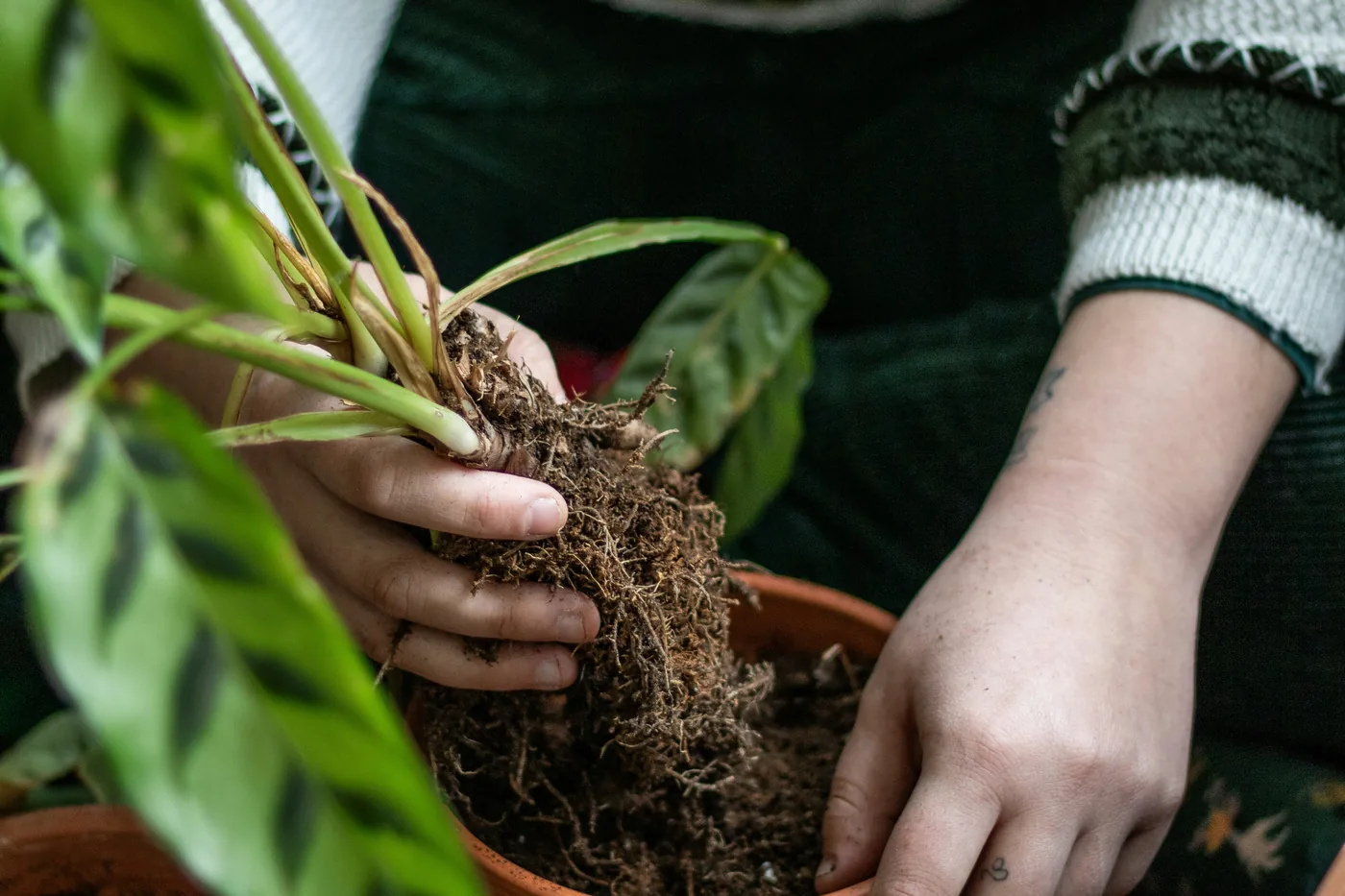
Spread newspaper, turn the pot on its side, support the base of the stem between your fingers and slide the plant out. If it is stuck, tap the rim on the table edge or run a knife round the inside. Then look, and pull gently on a few roots.
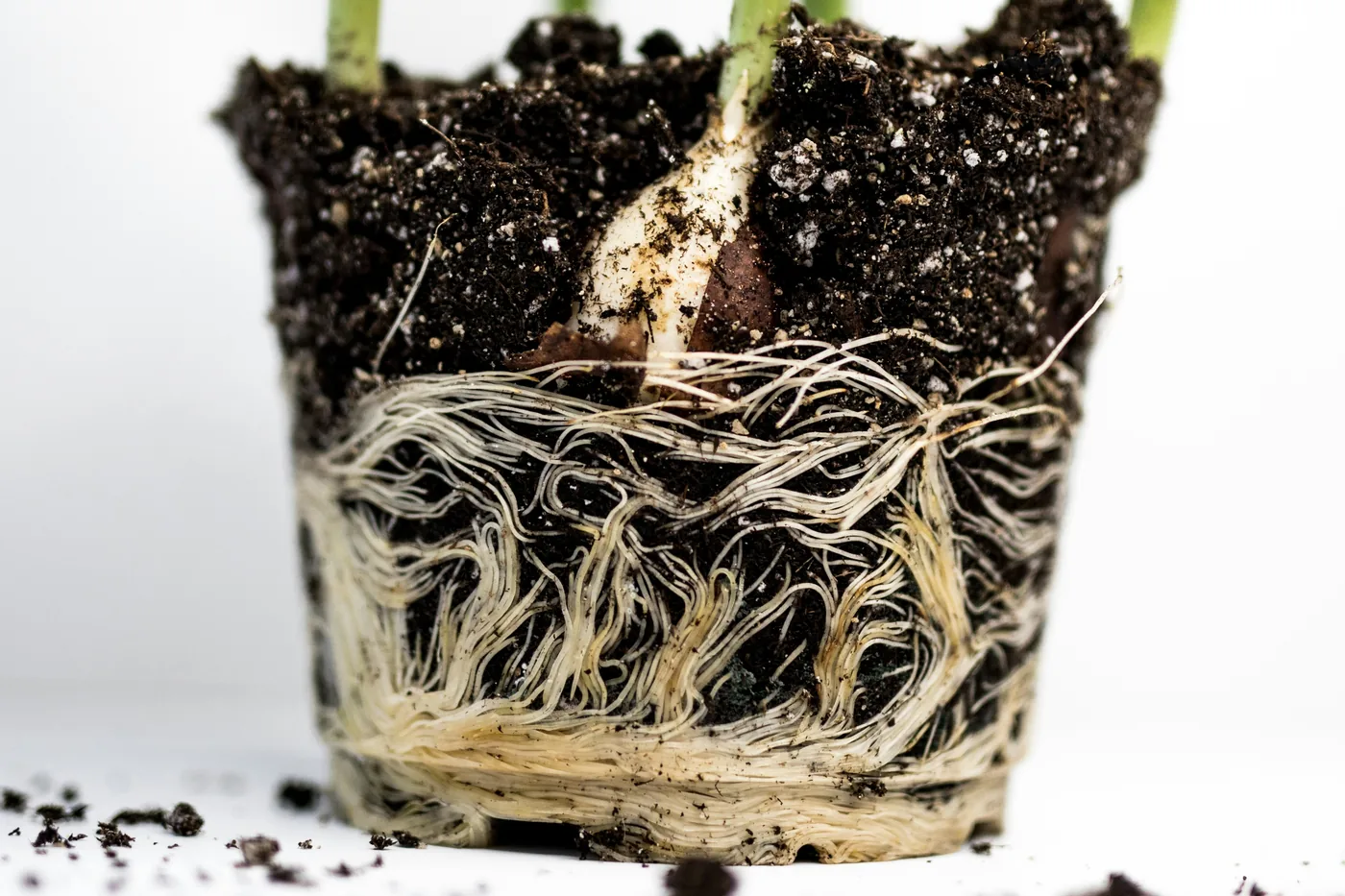
Healthy roots
- pale — white, cream or light tan, depending on the plant
- firm, and springy when bent
- hold the compost together in the shape of the pot
- smell of compost and nothing else
Rotten roots
- brown, grey or black, sometimes with a darker core
- soft, mushy, and slip off between your fingers when pulled, leaving a thread behind
- the compost falls away from them, wet and heavy
- smell sour
Most plants with rot have both kinds: brown mush at the bottom and the outside, some pale root nearer the crown. What matters is how much of the second kind there is.
Can it recover?
Can a plant recover from root rot?
Usually, yes — and one rule decides it. If there is firm, pale root left and the crown or the base of the stem is still firm, the plant is worth saving — and it will usually make it. A plant can lose most of its roots and regrow them from a healthy crown over a few weeks.
If the base of the stem is soft all the way through, or the crown of a rosette plant is mush, the rot has reached the part that makes new roots and there is nothing to regrow from. At that point the honest move is to take a cutting from any firm green growth above the rot — most common houseplants root readily from a stem piece in water or compost — and let the rest go. A plant kept alive at the top for another fortnight is not being saved, it is being watched.
Two plants are worth a second look before you decide: succulents and cacti, which can rot at the base and still be restarted from the healthy top once it has dried and callused for a few days, and orchids, whose roots are meant to be silvery-green and firm, and which will grow new ones from the base if every mushy one is cut away and the plant is left dry and bright.
Root rot treatment, step by step
Treating root rot is one job, done once, in an hour: cut away the rot, change the soil, repot smaller. Doing half of it — trimming a few roots and putting the plant back in the same wet compost — does not work, because the compost carries the problem.
- Get the old compost off
- Shake and tease away as much as will come. Rinse the roots under a gentle tap if they are caked; the point is to see every root and to leave none of the infected compost behind.
- Cut back to firm tissue
- With clean, sharp scissors — wiped between plants — cut off every root that is brown, soft or hollow, back to where it is pale and firm. Be thorough. A single rotten root left on will spread into the healthy ones. If the base of the stem has soft patches, cut those away too, to clean tissue.
- Take off leaves to match
- A plant that has lost half its roots cannot support all its leaves. Remove the yellowed and the oldest ones so what is left is in proportion. It will look sparse; that is correct.
- Let it sit, briefly
- For most leafy plants, an hour or two on newspaper in the shade so the cuts dry. For succulents and cacti, several days until the cut surface has hardened over; planting them wet restarts the rot.
- Repotting: smaller, in fresh compost, into a pot with holes
- Smaller — a pot that fits the roots you have left, not the plant you had. More compost than the roots can use is more water than they can drink, and that is how this started. Use fresh, free-draining compost; the old lot goes in the bin, not back in the pot, and the old pot is scrubbed before it is reused. If there is no drainage hole, use a pot that has one and put it inside the decorative one.
- Water once, then wait
- One thorough watering to settle the compost, drained fully. Then nothing until the top few centimetres are dry — which, with a small root system, may be two weeks or more. Put it somewhere bright but out of direct sun, and warm.
This page names categories, not products, on purpose. There are treatments sold for root rot; none of them substitutes for cutting away the rot and changing the compost, which is the whole of what works.
Root rot, plant by plant
The method is the same for every houseplant; what "healthy" looks like, and how much rot a plant will forgive, is not.
- Monstera and philodendron — thick, cream-to-tan roots that should snap rather than squash. Rot shows as dark, hollow roots and a soft stem base. They regrow from any node above the rot, so a monstera with a mushy base is often a monstera cutting waiting to happen.
- Pothos — the plant most often rotted, because it is the plant most often watered on a schedule. Fine white roots; rot turns them into brown thread. Forgiving: a few centimetres of stem with one node will root in a glass of water in a fortnight.
- Peace lily — the classic case, because it droops dramatically and gets watered for it. Roots should be pale and firm under the crown; rot makes the crown itself soft, and once the crown is gone the plant is gone. Divide and keep any firm section.
- Snake plant, ZZ and other succulent-rooted plants — orange or pale rhizomes that should be firm as a carrot. They rot from the base up, fast, and mostly in winter. Cut back to firm tissue, let the cuts dry for a few days, and replant in gritty compost; healthy leaves will root on their own.
- Orchids — roots silvery-grey when dry and green when wet, and firm. Mushy, brown or papery roots are dead; cut them all off, repot in fresh bark, and the plant will grow new ones from the base if it is kept dry and bright.
- Cacti and succulents — the base darkens and softens and the top may still look fine. Cut above the rot, let the wound callus for several days, and restart it on dry compost. Do not water until roots have formed.
The weeks after
Expect it to sulk. A plant that has just lost roots and leaves will droop for a few days, and may drop another leaf or two. That is not the rot continuing; it is the plant living on what it has while it grows new roots. Do not respond by watering.
The sign it is working is a new leaf, or the existing ones firming up, usually within two to four weeks. From that point it is an ordinary plant again, on an ordinary schedule — one set by the compost drying, not the calendar.
The sign it is not: the base softens again, or the compost smells within the first week. That means rot was left behind at the trim. Unpot it and cut harder; if there is no firm tissue left, take the cutting.
Stopping it coming back
- Water when the top few centimetres are dry, and not before. Push a finger in every time. This one habit prevents nearly all root rot.
- Never let the pot stand in water — wet soil under the roots is the whole cause. Tip out the saucer or cover pot twenty minutes after watering.
- Keep the pot size honest. Pot up one size at a time, and only when the roots fill the pot.
- Expect the interval to lengthen in autumn and winter — less light, less growth, less drinking. A plant watered to its summer routine in November is on its way back here. The autumn guide has the routine.
- Be suspicious of any pot without a hole, and of self-watering pots for plants that like to dry out.
Still not sure?
The RHS's page on phytophthora root rot is the reference for the pathogen side of this; this page is the houseplant case.
Sabz's Check-up weighs the watering you have actually logged against what the plant should be getting, so when you describe a soft base it can say whether the history points to rot — and how far along it is likely to be — rather than guessing from a photograph.
Free to start. No account, no analytics.